Tuesday, February 28, 2006

Lasang Pinoy 7: Eggs


Gising, mag-ALMUSAL na tayo is the topic for Lasang Pinoy 7 which is hosted by Joey of 80 breakfasts. Breakfast, agahan, or almusal is the day’s first meal. Eating breakfast not only fuels the body to help provide stamina, it is also very important for weight management and weight loss. It helps curb our hunger and prevent binge eating later in the day. We really should "Breakfast like a King, lunch like a lord and dine like a pauper…."

When I was a child, breakfast for our family usually composed of hot toasted pandesal from Juat bakery, different kinds of spread; kesong puti, cheese with anchor butter, fried eggs; and hot coffee or milk.

When I reached my teenage years, I started skipping breakfast. I just drink coffee or milk before going to school. I didn’t have enough time to eat because I usually woke up late (typical teenage habit).

I started eating rice for breakfast when I was working already. I need extra energy to be able to work efficiently. I feel exhausted every time I don’t eat enough.

According to a book I read, breakfast is even better with protein. Eggs are a great source of protein, vitamins like B and K as well as folic acid. And since there are many easy ways in preparing eggs, I usually cook it for breakfast. But as much as possible I limit our egg intake for 2-3 times a week.

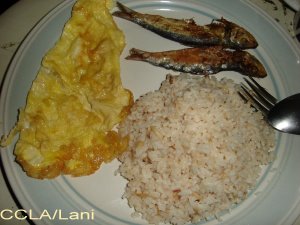
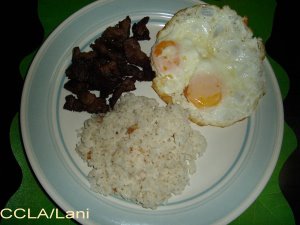
Whenever I want the pares-type (pair) breakfast; like tapsilog, longsilog, tuyosilog, I usually cook egg sunny-side up or omelette-style. Sometimes I add garlic, onion and tomatoes for my scrambled egg.


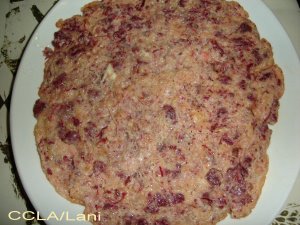
I also cook corned beef with scrambled egg. My son loves it so much. I just mix the corned beef with egg and fry it just like in tortang giniling.


Monday, February 20, 2006

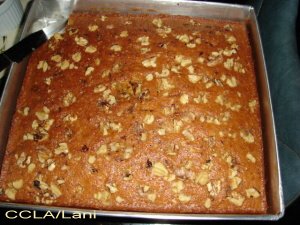
Carrot-Raisin Bars

Now that I’m enjoying baking, I gain extra pounds as a consequence. I couldn’t resist eating a lot. I really made a point to use the freshest and finest ingredients every time I bake. My hubby and son love to eat what I bake. My hubby is also giving his officemates some of the goodies because he is really so proud of the taste of it.

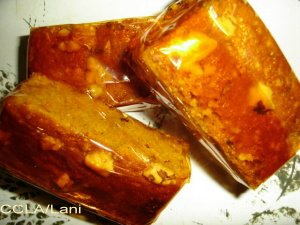
Every time I eat, guilt sets in. How can I lose weight or even maintain my present weight if I don’t get rid of those calories from cakes? Well, I read from many dieting books, eating vegetables is healthy. So, since I love to eat, I chose this cake recipe with carrots. Since carrot is a vegetable then I’m now eating healthy (hahaha, what a logic!). I have this carrot-raisin bars recipe which is really delicious and nutritious but still loaded with fats and calories. At least, I actually get rid of a little of the guilt I feel because there's vegetable in my cake.

Do I make sense here? Oh, well never mind. I just love to share this recipe with you and from now on I’ll tell myself that even I’m plump, I still look beautiful and sexy (hahaha).

Carrot-Raisin Bars

Ingredients:

1 1/2 cup light brown sugar
1/2 cup softened margarine
2 eggs
1 teaspoon vanilla
1 1/2 cup unsifted flour
1/2 teaspoon salt
1/2 teaspoon baking soda
1/2 teaspoon baking powder
1/2 cup chopped raisins
1 1/2 cup finely grated carrots
1/2 cup finely chopped walnuts

Procedure:

Preheat oven to 350°F.
Grease a 9”x13” baking pan. Mix sugar and margarine. Add eggs and vanilla; beat. Stir in dry ingredients. Add raisins and carrots; stir. Spread mixture into baking pan; sprinkle with walnuts.
Bake about 40 minutes or until a toothpick inserted in center comes out clean. Cool; cut into bars.

Sunday, February 19, 2006

Hello, Baking!

After my unsuccessful attempt in baking about 7 years ago, I found the courage to try it again. But before I started, I bought some baking equipment especially the oven thermometer. It is necessary that you have the right oven temperature while baking. Now I know that the failure in baking lies in the temperature and measurement of ingredients.

I started baking banana cake. My friend Nora shared to me her simple banana cake recipe. Hooray!!! I got it right. Well, maybe it’s just a simple recipe that’s why I successfully made it.

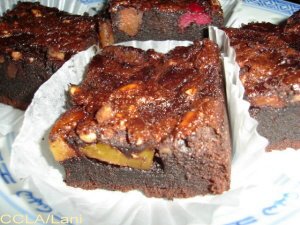
I became a little adventurous, I started baking brownies. The first attempt of baking brownies was a real failure; I called it “roasted brownies.” But I don’t lose hope and said to myself, “C’mon Lani, you can try it again.” Here’s my recipe for brownies which I got from Del Monte kitchenomics website. And I’m happy I did it perfectly.

Fruit Cocktail Brownies

Ingredients:

2/3 cup margarine or butter
¾ cup cocoa powder
2 cups sugar
4 pcs eggs
1 tsp vanilla
1 cup all-purpose flour
1 tsp baking powder
1 tsp iodized fine salt
1 can (439 g) Del Monte Fiesta Fruit Cocktail
½ cup roasted cashew nuts

Procedure:

Pre-heat oven to 350°F.
Melt margarine in sauce pan over low heat. Add cocoa. Remove from heat. Add sugar, eggs and vanilla. Stir in flour, baking powder, salt, fruit cocktail and nuts.
Pour onto greased rectangular pan (13” x 9”). Bake for 45 minutes or until brownies start to pull away from sides of pan. Cool slightly. Cut into bars.


Moral of my story: “Try and try until you succeed.”

Monday, January 30, 2006

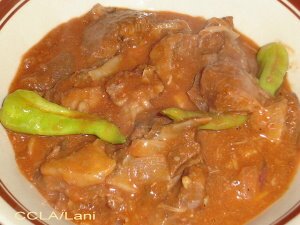
Lasang Pinoy 6: Kalderetang Kambing


The drinking of alcohol is a popular practice in the leisure time of most cultures; such as Filipino culture. It is also held in regard as a key part of many religious ceremonies like fiestas and weddings. Drinking is always a part of Pinoy celebrations like birthdays, anniversaries, and others. The most popular way to strengthen friendship is also through drinking.

Drinking session is not complete without pulutan. Pulutan is the Filipino version of appetizers/hors d'oeuvre/pica-pica or finger foods. A pulutan can be as simple as peanuts and chicharon or as exotic as adobong sawa,pawikan or bayawak, kalderetang aso or pusa, and balut ala pobre (adobong balut).

When I read
Ting’s blog announcing the topic for our Lasang Pinoy 6, adobong bayawak is the first pulutan recipe that came to my mind. My aunt is expert in cooking this and I know she will share her expertise with me. Unfortunately, I don’t know where to find and buy bayawak nowadays; it’s an endangered species here in the country. So, I called up my mom to ask for another pulutan dish. She told me that kalderetang kambing is the favorite pulutan of her brothers whenever they have drinking spree. She also gave me the recipe. Since I can buy goat’s meat here in Quezon City, I chose kaldererang kambing to be my entry for LP6.

Ingredients:
1/2 k goat's meat
1 can (227 g) tomato sauce
1 can (85 g) liver spread
1 tbsp crushed garlic
1 onion, chopped
2 tbsp soy sauce
3 tbsp vinegar
1 1/2 cup water
3 siling labuyo
2 siling berde (pansigang)
1 laurel leaf
pepper to taste

Procedure:

1. In a pot, place goat's meat with ginger, 2 tbsp vinegar, and enough water to cover the meat. Bring to a boil and simmer for 3o minutes. Discard the water and ginger. This must be done to remove the pungent odor of the goat's meat.

2. Add soy sauce, vinegar, laurel leaf, pepper, siling labuyo and water to the meat. Boil and simmer for 2 hours or until meat is tender, replenishing water once in a while.

3. Mash liver spread in tomato sauce. Set aside.

4. In another pan, saute garlic and onions in margarine or butter. Add meat including the stock. Simmer for 10 minutes. Pour the tomato sauce with liver spread into the pan, add siling berde and simmer for 5 minutes.


Sunday, January 22, 2006

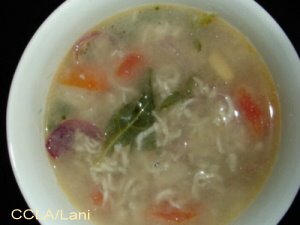
Sinigang na Dulong sa Kamias


My family loves to eat sinigang. It is one of the most popular Filipino dishes aside from adobo and lechon. There are many variations of sinigang; every region here in the country has their own version of it. It’s that certain sourness that gives sinigang a much-coveted taste.

I lived in Bulacan for 4 years; they used to cook sinigang na baka using guavas. They also use tamarind pods and leaves for their sinampalukang native chicken. My lola who comes from Bulacan uses calamansi and tomatoes for sinigang na sapsap.

A friend of mine from Pampanga called sinigang sa bayabas bulanglang. I was really confused before when she told me that her husband wanted bulanglang but what she bought from the market were ingredients for sinigang sa bayabas. In Tagalog and Ilocos regions, bulanglang is a vegetable dish with bagoong na isda as broth.


In Cebu, a tomato-soured sinigang is called tinowa. In Angono, Rizal, they make barutak, a poor man's sinigang of ayungin flavored with shrimp-head juice.

Aside from the ingredients I mentioned, sinigang broth is also flavored with kamias; santol; green pineapples; green mangoes; green sineguelas; or any sour leaf, fruit or flower.

The accompanying vegetables, which complete the meal in a pot, vary according to what is customary, or in season. Some pinoys use singkamas, alibangbang leaves, leeks and even patola in sinigang. I usually use string beans, eggplant, radishes, okra, taro, onions, and pechay for my sinigang na baboy. Whenever I cook sinigang na bangus or baka sa bayabas, I use banana heart and camote tops. Sinigang na kanduli sa miso (soybean mash) and sinampalukang manok are complemented with mustard green and ginger. But I don’t forget to put tomatoes and green sili to every sinigang recipe I cook.

One of the secrets of tasty sinigang is cook it in rice washing.

Many restaurants here also offer different variations of sinigang. I heard that sinigang na corned beef is really delicious as well as sinigang na lechon. I will try these two one of these days.

I have this not so ordinary sinigang recipe. It is sinigang na dulong sa kamias. Dulong or usually called in English as pygmy goby, dwarf goby or starry goby, is a very small fish which can be eaten with crisp bones just like dilis or ayungin.
I got this recipe from CMC; the maker of Knorr products. Since we’re sinigang addict, I couldn’t help myself but to try different sinigang recipe.

Ingredients:
2 tbsp cooking oil
3 cloves garlic, finely chopped
1 pc small onion, finely chopped
1 tsp ginger, peeled and sliced thinly
1 cup fresh dulong
4 pcs small tomatoes, coarsely chopped
4-4 ½ cups water
1 pack Knorr Sinigang sa Kamias Mix
½ cup sili leaves
siling pansigang (optional)

Procedure:

1. In a sauce pan, heat oil and sauté garlic, onions and ginger. Add the dulong
and cook for about 2 mins. Add the tomatoes and cook for 1 minute more.
2. Add in the water, Knorr Sinigang sa Kamias Mix and sili leaves. Simmer until
leaves are cooked.

Tip: Fresh dulong purchased from the market should be cooked right away to preserve freshness. Malunggay leaves would also be a nice addition to this dish.

I would say that the Sinigang sa Kamias Mix tastes like the real kamias. But as much as possible, use fresh ingredients in cooking.


Friday, January 06, 2006

Ilocos Empanada in the Making

I always watch TV programs or documentaries showcasing the beauty of the Philippines. One of the beautiful places I would love to visit is Vigan, Ilocos Sur. UNESCO made Vigan as one of the world’s heritage site.

I remember when I was 14 years old; I watched the movie “Underage” starring Dina Bonnevie, Maricel Soriano and Snooky Serna. Some of the scenes from that movie were shot in Vigan; the old house where they lived and the streets of Vigan.

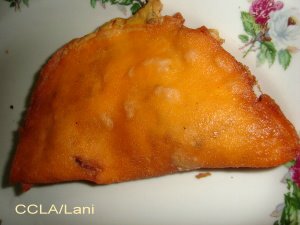
Talking about Vigan isn’t complete without mentioning its food and delicacies. I love vigan longanisa, bagnet, and the most-famous empanada with sukang iloko dip.

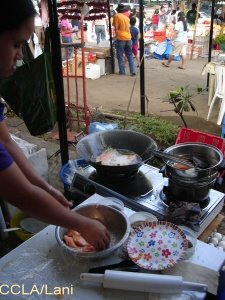
Whenever I want to eat empanada I go to Sidcor Market in The Lung Center of the Philippines parking area every Sunday or in Katipunan, QC. While I was waiting for my order of empanada last December 24, 2005, I asked the stall owner in Sidcor Market if I could take pictures of their empanada cooking. She was really very generous enough to agree.

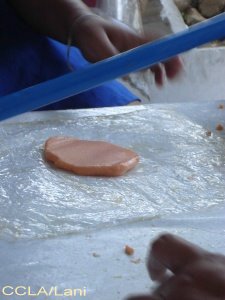
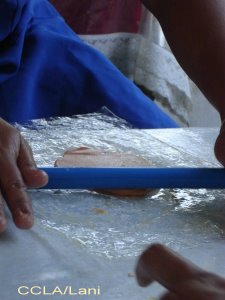
The procedure starts with the preparation of the wrapper. The woman gets some dough made from rice flour, form it into circle and flatten it with rolling pin.


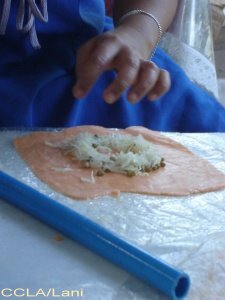
She puts shredded papaya, cooked mongo on top of the flatten crust.
She adds vigan longanisa and 1 whole egg.


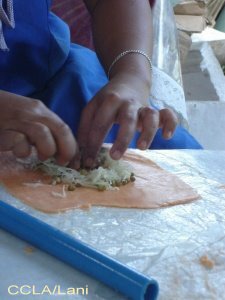
She folds it into half, trim the wrapper, and seal the edges then deep-fry in oil.


Yummy vigan empanada
By the way, empanada costs PhP35.00 each. I also bought bagnet for PhP340.00 per kilo and Vigan longanisa for PhP180.00.


Wednesday, January 04, 2006

Nilasing na baka

We usually see men on the streets having a good time and drinking pale pilsen beer. It’s a common sight here in the country especially in places wherein the neighborhood bonding is strong. Drinking pale pilsen beer is usually a part of a celebration whether birthdays, baptisms, weddings, fiestas, etc. Many people also drink beer to drown their miseries.

I did drink beer when I was a teenager but not that I like the taste of it but out of peer pressure. You’re not “in” if you don’t drink. The bitterness of it doesn’t suit my taste.

According to Wikipedia, there are many different types of beer, each of which is said to belong to a particular style. A beer's style is a label that describes the overall flavor and often the origin of a beer, according to a system that has evolved by trial and error over many centuries.

A major component of determining the type of beer is the yeast used in the fermentation process. Most beer styles fall into one of two large families: ale, using top-fermenting yeast, or lager, using bottom-fermenting yeast. Beers that blend the characteristics of ales and lagers are referred to as hybrids.

Most of today's lager is based on the Pilsner style, pioneered in 1842 in the town of Plzeň, in the Czech Republic.

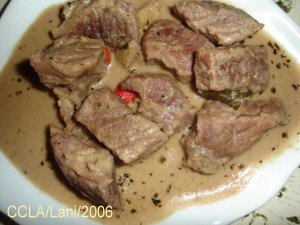
Since I don’t like the taste of beer straight from the mug/bottle, I instead used it in cooking. I got this Nilasing na Baka recipe from CMC (California Manufacturing Corporation).


Ingredients:
1 bottle pale pilsen beer
1 kilo sirloin beef
Medium sized ginger, minced
6 stalks pandan, sliced and crushed
2 pcs. Knorr beef broth cubes
2 cups coconut milk
3 pcs. Siling labuyo
2 tbsp atsuete oil
½ tsp dried oregano
½ tsp basil
2 pcs red bell pepper, sliced
1 ½ tsp Knorr Liquid Seasoning
1 cup coconut cream
2 tbsp spring onions, chopped

Procedure:
1. In a saucepan, combine beer, beef, ginger, pandan, Knorr broth cubes, and the coconut milk.
Simmer until beef is tender.
2. Add sili, atsuete oil, basil, oregano, pepper, and Knorr Liquid Seasoning. Simmer for 5
minutes. Stir in coconut cream and the remaining ingredients. Cook until done. Garnish with
spring onion before serving.


I followed the recipe but forgot to buy atsuete, that’s why it lacks in color. And I also add 1 tsp of sugar to neutralize the spiciness. What can I say about the taste? Its taste resembles a lot to beef with curry because of the spices and herb I used.

Friday, December 30, 2005

Oasis in Cubao

CUBAO is one of the places I associate with my childhood. Before the emergence of SM North Edsa, Ayala Center, Ortigas Center, and Libis, Cubao held the title of the most-visited place in Metro Manila.

My first carnival visit was in Fiesta Carnival. I was in Grade 5 when our section had a field trip and one of the destinations was the Fiesta Carnival. I couldn’t forget how dizzy I was when we took the octopus ride. I also rode the roller coaster and caterpillar. It was such a lovely experience for me.

My friends and I always watched the Christmas presentation being shown in COD Cubao every year. Unfortunately, COD closed down last year and the traditional presentation ended.

The main attraction in Cubao is the Araneta Coliseum. This is where I watched “Holidays on Ice” when I was 10 years old.

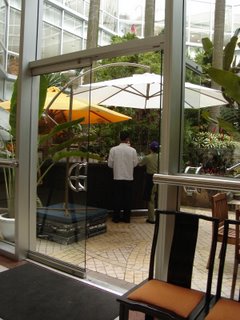
The Aranetas (owner of Araneta Center) are developing Araneta Center now to regain the glory of Cubao. One of the newly-built establishments in Cubao is the Gateway Mall. For me, it is an upscale department store. The main attraction of the mall is the oasis. I couldn’t help myself taking pictures of the oasis.


The place where Fiesta Carnival was formerly situated had become Shopwise Store. Fiesta Carnival became an outdoor carnival infront of SM Cubao.

Tuesday, November 22, 2005

Lasang Pinoy 4: Soul Food [Paksiw na Pata]


Soul food is an ethnic cuisine, food traditionally eaten by African Americans of the Southern United States. Many of the various dishes and ingredients included in "soul food" are also regional fare and comprise a part of white Cuisine of the Southern United States, as well.

The style of cooking originated during slavery, when slaves were generally given only the "leftover" and "undesirable" cuts of meat (after the slaveowners had taken the choicest cuts), and had only the vegetables they grew for themselves. After slavery ended, many former slaves, being poor, could afford only off-cuts of meat, along with offal. Subsistence farming yielded fresh vegetables, and fishing and hunting
Soul food is the style of cooking originated during slavery, when slaves were generally given only the "leftover" and "undesirable" cuts of meat (after the slaveowners had taken the choicest cuts), and had only the vegetables they grew for themselves.

The dominant figure in the cultural translation through food is the black woman. Her expressions of love, nurturance, creativity, sharing, patience, economic frustration, survival, and the very core of her African heritage are embodied in her meal preparation" (Hughes, p.272). Women preparing their dishes get a sense of pride as they watch their family devour the food they have prepared. They are happy when they have fulfilled the cravings of their loved ones. "Plumpness is a symbol of the wonderful job which she is performing. Even when her job occupation is food preparation for White America, her success symbol is plumpness. A big body to the Black woman represents health and prosperity" (Huges, p.273).

Lola Anday, my paternal grandmother who died from breast cancer when I was 12 years old, can be likened to the plump black woman who was the dominant figure in the cultural translation through food of African-American people. Even for Asians like us, women are the ones who shower their family with love and concern, they are also usually the ones who prepare dishes for their loved ones.

I remember when I was young; once a month we used to hold a family salo-salo (get-together)in our grandparents’ home in Dagupan, Tondo, Manila. All of my father’s siblings and family were always present at the said affair. It was a bonding time for the family. We shared funny stories with our cousins; we played a lot, too.

My lola Anday was the one who cooked for all of us. She was a very beautiful plump woman. In her menu, she wouldn’t forget to include paksiw na pata with plenty of banana blossom every month because that is my favorite viand. That's why I chose this recipe as my soul food, to pay tribute to my lola's love and devotion to our family.

Food that brings back memories of my loved ones is my soul food. Every time I cook and serve this recipe to my family, I can’t forget to tell them that this food reminds me of my lola.


Paksiw na Pata

Ingredients:
pata front (cut into serving portion)
white vinegar
soy sauce
cup water
crushed garlic
banana blossoms
1 crushed laurel leaf
peppercorns
sugar
(I didn’t specify the exact measurement because I usually cook according to my taste)

Procedure:
1. Marinate the pork pata in the mixture of vinegar, soy sauce, and crushed garlic.
2. Add water, peppercorns, and laurel leaf to the marinated mixture and simmer pata until
tender.
3. Add salt and sugar to taste (I want my paksiw sweet).
4. Add plenty of banana blossom.


I am my lola’s first apo. She was a widow with no child when he met my lolo who was a widower with 3 children. They got married and had 3 sons. Even though my lolo had 3 children in his first marriage, lola had a harmonious relationship with her stepchildren.

My mom told me that my lola was very excited when she found out that she was pregnant with me. Lola Anday made sure that my mom would follow all her obstetrician-gynecologist’s advice and that she would religiously take all her vitamins and visit her doctor regularly for prenatal check-ups.

When I was born on June 3, 1966, my grandma was so happy when she saw me. She and my lolo took turns in caring for me while my mom was still recovering from the caesarean operation. I was not an easy baby to take care of (hehehe). I always cried a lot and was also very sickly.

My lola chronicled my life from the day I was born until the day she became sick. Everything about me was written in her diary; the first smile, the first laughter, the first word that I uttered, etc. We only found out this chronicle book entitled Lanie’s biography when we arranged her things after she died.

She provided for all my needs and kapritso. She had so many dreams for me; she wanted me to be a doctor, to have my own car when I reached college, to have my own flat with her, she also wanted me to travel to other countries, and so on. I would say that I became spoiled because of my lola. I was the apple of her eyes. She was so proud of me and always so happy to tell her friends that we looked alike. But the truth is my lola was more beautiful than I am. My vacation and weekends were always spent in my grandparents’ house. I always accompany her every where she went with her friends. They all loved to sing, they were members of a choral group.

When I was 11 years old, my lola found out that she had 4th stage breast cancer. She tried different medical procedures to combat cancer. She underwent cobalt treatment and chemotherapy. She also wanted to undergo mastectomy but the doctor discouraged her. I saw her sufferings but she didn’t give up easily. She was a very strong woman; despite of her illness she tried not to show us her pain. I remember almost a month before she passed away, she was already bedridden because her breast cancer metastasized to her bones. She always cried and ask for forgiveness to me and my mama because she didn't want to burden us. She wanted to live longer to see me fulfill our dreams. Lola wanted to see me graduated in Elementary (that time) with top honors. I became the valedictorian in our school but unfortunately when I graduated, my lola wasn’t able to attend the ceremony because she was in critical condition in the hospital. She went into coma, and died 10 days after my Elementary graduation.


Tuesday, October 25, 2005

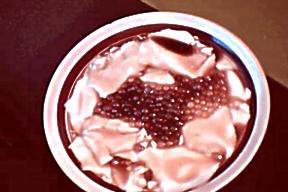
Lasang Pinoy 3: Pinoy Street Food [ TAHO! ]

This entry is for the Lasang Pinoy 3:
Pinoy Street Food

TAHO! TAHOO! TAHOOO!

“Mom, manong (that’s how we call the taho vendor) is already here; please give me barya to buy taho.” I was always excited whenever I hear the taho vendor’s voice every morning when I was young. Taho is one of my favorite street foods until now. I usually request the vendor to add more arnibal and sago to my taho. I prefer my taho to be really hot (as in bagong luto talaga).

I passed this craving to my son who also loves it so much. Even my niece Gwen waits every morning for the taho vendor. Her day isn’t complete without eating our favorite street food.

I tried before to make taho because I was a little worried about how this delicious food was being prepared and cooked. Being a mommy now, I want my son to eat food which is nutritious and hygienically prepared. Unfortunately, the taho I made didn’t taste like the one we used to buy from manong.

Whenever I go to Sidcor Market (that’s the organic market here in Lung Center of the Philippines parking area every Sunday), I usually buy taho from this stall which is selling soybeans products. I forgot the name of the store (sorry because it’s been a little while since I visited the Sunday market). The saleslady told me that their taho is really pure soybeans and hygienically prepared although a little pricey. That’s PhP25. per cup. But if you would buy it from manong, it’s much cheaper.

I just can’t control my craving for taho. Hygienically prepared or not I still wait for manong every morning to savor the taste and sweetness of taho. Anyway, food addiction runs in the blood of our family (he,he,he).